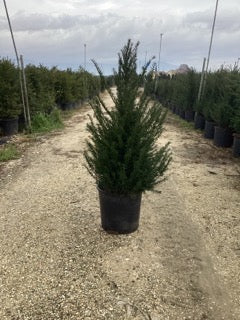
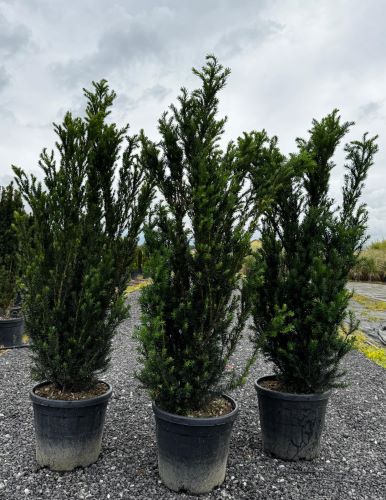
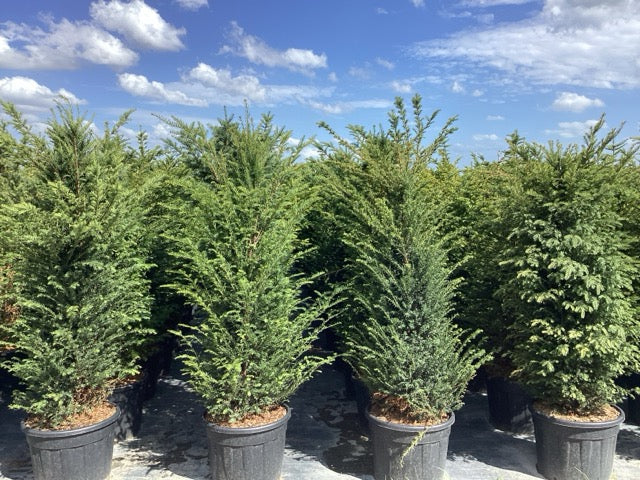
Known as the English Yew or simply Common Yew, Taxus baccata is one of the most elegant and long-lasting evergreen hedging plants available. With its dense, dark green foliage, slow growth, and superb shade tolerance, Yew is ideal for creating formal boundaries, privacy screens, or timeless garden structure.
Highly valued in both traditional and contemporary landscapes, Yew is a classic choice for topiary, maze hedges, and high-end garden design where precision and permanence are key.
Growing Conditions
Yew thrives in well-drained soil, including chalk, loam, clay, or sandy types, and prefers neutral to alkaline conditions. It will grow well in full sun, partial shade, or even deep shade, making it exceptionally versatile. Yew does not tolerate waterlogged ground, so good drainage is essential.
Where to Plant It
Perfect for formal hedging, structured garden rooms, low to tall boundaries, or sculpted topiary, Yew adapts beautifully to a range of garden styles. It is well suited for heritage landscapes, cemeteries, and high-end residential gardens where a low-maintenance, architectural look is desired.
Foliage, Flowers & Berries
Yew features flat, dark green needles arranged in a dense, horizontal pattern. Though often overlooked, small yellow flowers appear in spring, followed by bright red berries (arils) in autumn on female plants, which are highly attractive to birds. Its evergreen canopy offers year-round privacy, shelter, and visual appeal.
Size & Growth
-
Growth Rate: Slow to moderate (20–30 cm per year)
-
Ultimate Height: Easily maintained at 1–4 metres
-
Spacing: 2–3 plants per metre for dense coverage
-
Time to Establish: 3–6 years for a full, formal hedge
Delivery
Pallet delivery £85 to most of mainland UK — FREE on orders over £500. One pallet carries up to 5 multi-stem trees or 15 hedging plants and the delivery price is the same however full it is, so it pays to fill your pallet. Kerbside delivery; we’ll contact you to arrange a convenient day. Scottish Highlands & Islands may carry a small surcharge — confirmed before dispatch.
Plant Now or Reserve for Autumn
We deliver all year round — our container-grown stock can be planted in any season (summer planting just needs committed watering). Prefer to plant in autumn, when establishment is easiest? Order now and add a note at checkout — we’ll reserve your plants and deliver when you’re ready.
Please note: the 175–200cm size is the exception — it is delivered in the dormant season only. We’ll agree timing with you after ordering.
Planting & Aftercare
Every order includes our planting and establishment notes. The single biggest factor in success is water: new plants need generous, regular watering through their first two growing seasons. Follow the guide and your plants will establish strongly — and we’re on the end of the phone if you need us.
Why Tree Heritage
We’re a working nursery in Hertfordshire, not a reseller. Every plant is selected, grown on and quality-checked by our own team before it leaves the nursery.