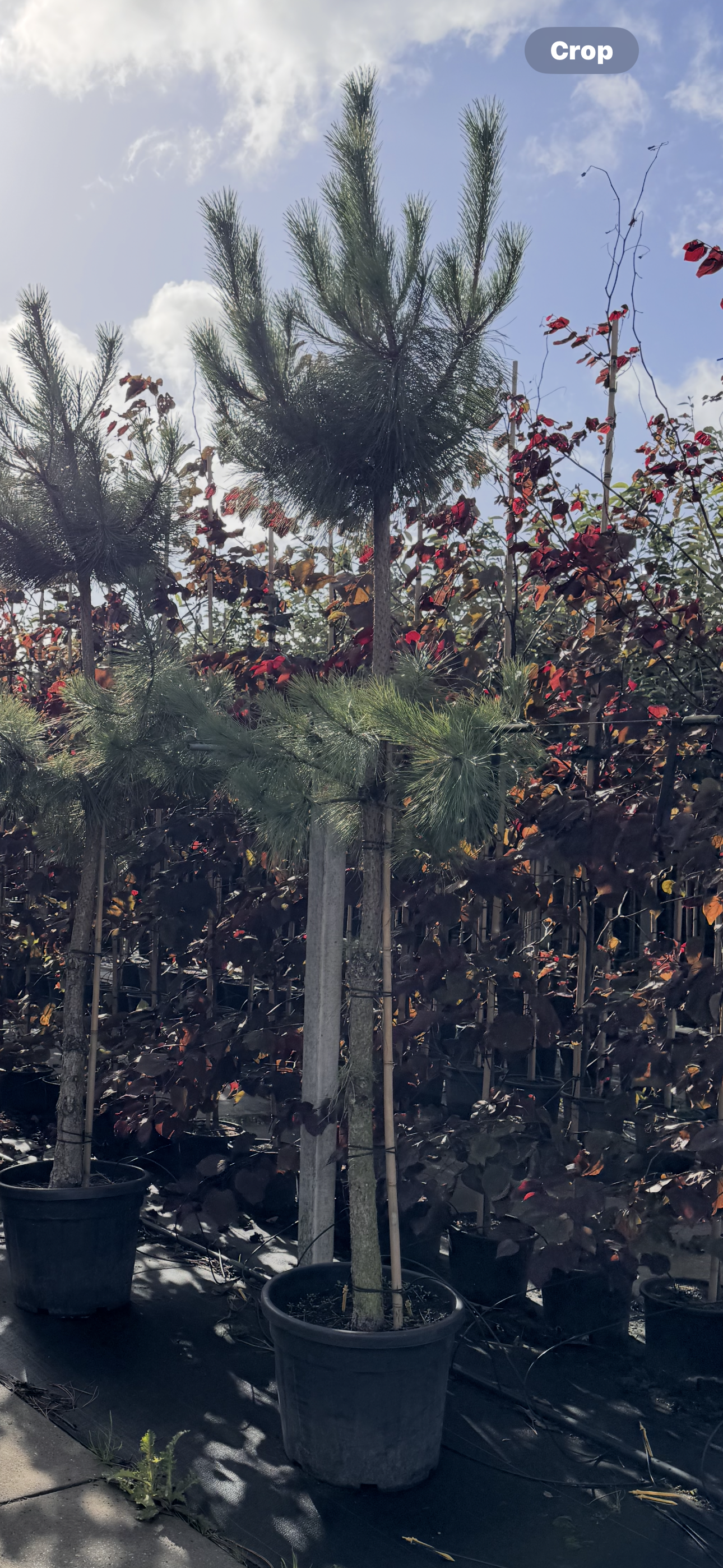
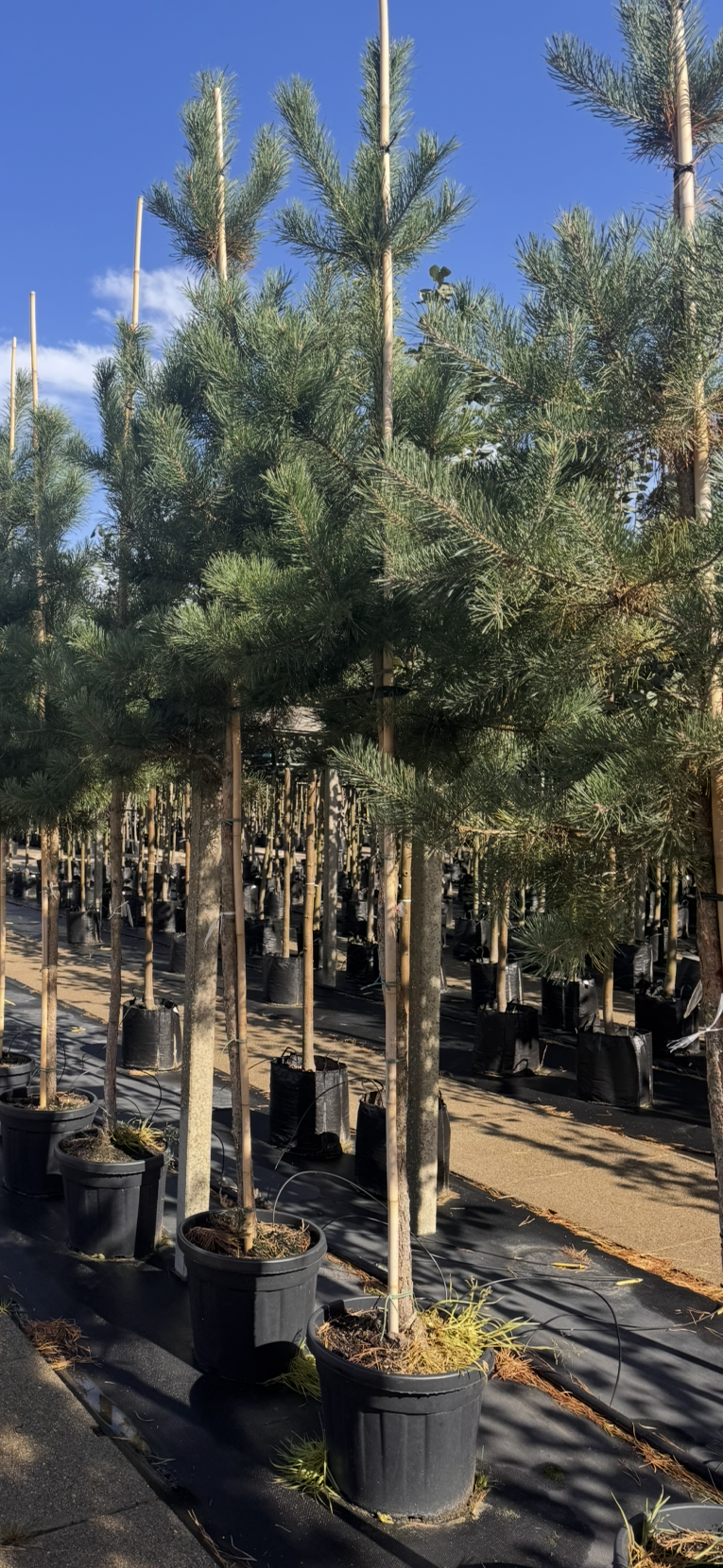
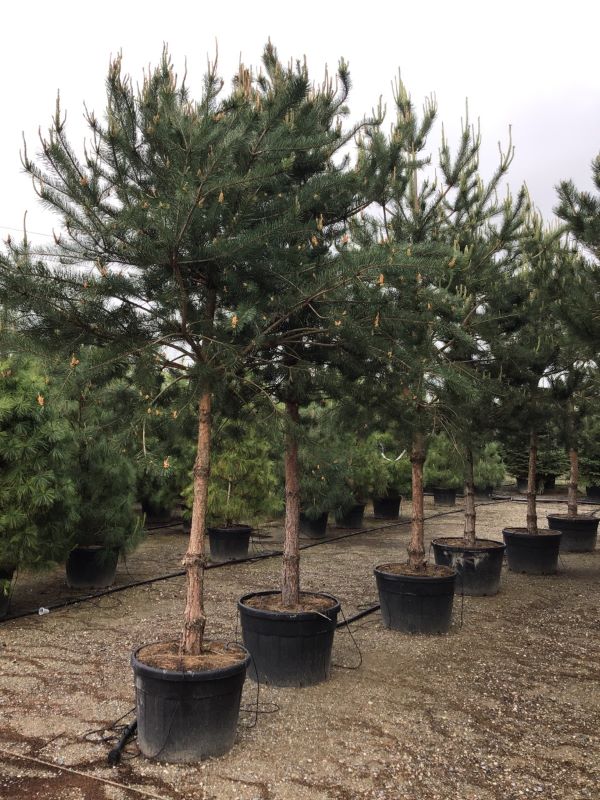
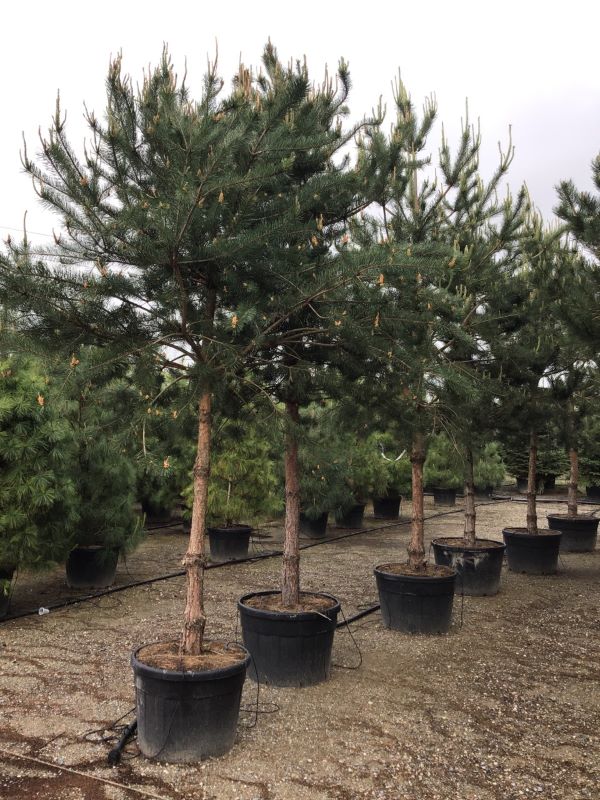
The Scots Pine (Pinus sylvestris) is a majestic native conifer, known for its rugged beauty and impressive year-round presence. With a tall, upright trunk and an open canopy of blue-green needles, it adds instant stature and structure to any landscape.
A favourite for wildlife-friendly gardens, woodland-style planting, and large rural spaces, the Scots Pine is an enduring, resilient choice that matures gracefully over time.
At Tree Heritage Nursery, we offer Scots Pine standard tees in three tree sizes: 10–12 cm, 14–16 cm, and 18–20 cm.
Growing Conditions
This hardy evergreen is highly adaptable, thriving in well-drained soils including chalky, clay, sandy, loamy, or even poorer soils. It prefers full sun, tolerates exposed locations, and performs well in both acidic and neutral soil types. Once established, it's very drought-tolerant and low-maintenance.
Where to Position It
Scots Pine is best suited to larger gardens, open landscapes, or wildlife planting schemes. It makes a dramatic specimen tree or can be planted in groups for a naturalistic effect. Its tolerance for wind and cold also makes it a strong choice for coastal or upland areas.
Foliage & Form
With its tall, straight trunk and spreading, irregular canopy, the Scots Pine has a distinctive and elegant silhouette. Its blue-green needles, borne in pairs, remain on the tree for several years, giving it a soft, textured appearance year-round. In spring, the tree produces small yellow-orange male flowers and reddish female flowers, which are followed by woody brown cones that ripen over two years. These oval cones provide food for wildlife and add ornamental interest. As the tree matures, the bark takes on a striking orange-brown flaky texture, offering visual appeal, especially in winter.
Size & Growth
-
Ultimate Height: Up to 35 metres
-
Ultimate Spread: 8–12 metres
-
Time to Ultimate Height: 20–50 years
Delivery — By Our Own Team
Standard and pleached trees are too tall for courier pallets, so our own team delivers them:
-
£66 — within 18.6 miles (30 km) of our Hertford nursery
-
£126 — 18.6–46.6 miles (30–75 km)
-
£300 — 46.6–205 miles (75–330 km)
-
£480 — 205–329 miles (330–530 km)
Oversized trees are delivered within a 4-week window and we’ll agree the date with you. Scotland or beyond 329 miles: please contact us for a quote before ordering. Select your distance band at checkout — we confirm by postcode before dispatch.
Plant Now or Reserve for Autumn
We deliver all year round — our container-grown stock can be planted in any season (summer planting just needs committed watering). Prefer to plant in autumn, when establishment is easiest? Order now and add a note at checkout — we’ll reserve your plants and deliver when you’re ready.
Planting & Aftercare
Every order includes our planting and establishment notes. The single biggest factor in success is water: new plants need generous, regular watering through their first two growing seasons. Follow the guide and your plants will establish strongly — and we’re on the end of the phone if you need us.
Why Tree Heritage
We’re a working nursery in Hertfordshire, not a reseller. Every plant is selected, grown on and quality-checked by our own team before it leaves the nursery.

%20is%20a%20majestic%20native%20conifer,%20known%20for%20its%20rugged%20beauty...)