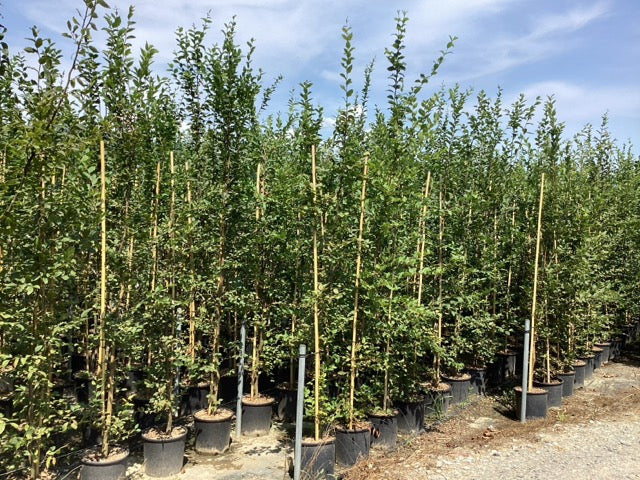
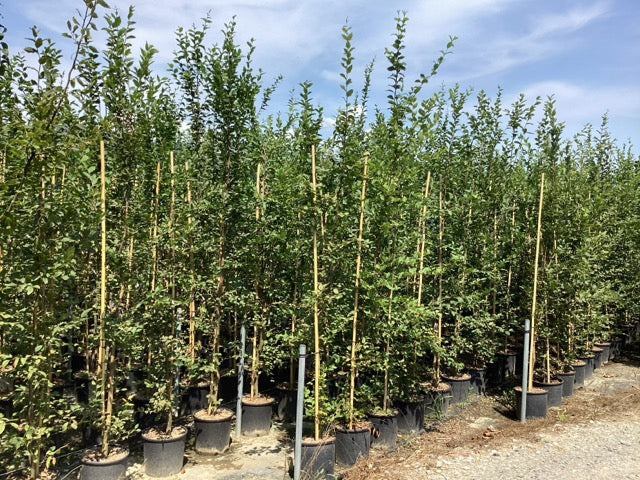
Also known as the European Hornbeam or Common Hornbeam, Carpinus betulus is a classic deciduous hedging plant, favoured for its densely textured foliage, strong structure, and winter leaf retention. With its attractive pleated leaves and tolerance for a wide range of conditions, Hornbeam offers a reliable and refined solution for hedging, screening, or formal boundary lines.
Hornbeam is an ideal alternative to Beech in heavier soils or more exposed locations, offering similar seasonal performance with greater resilience.
Growing Conditions
Hornbeam thrives in moist, well-drained soils, including clay, chalk, and loam, and will tolerate wet or heavy ground better than many other hedging species. It grows well in full sun or partial shade and is suitable for both rural and urban gardens. Once established, it is low-maintenance and long-lived.
Where to Plant It
Perfect for garden borders, driveways, privacy screens, and formal boundary hedges, Hornbeam brings structure and classic charm to both traditional and contemporary gardens. It’s also well-suited to windy or exposed sites thanks to its strength and durability.
Foliage & Seasonal Interest
The tree features distinctively ribbed, green leaves that emerge fresh in spring and deepen through summer. In autumn, the foliage turns warm shades of yellow and bronze, with many of the crisp, coppery leaves remaining on the branches into winter, providing visual cover and texture when other deciduous hedges are bare.
Size & Growth
-
Growth Rate: Moderate to fast
-
Annual Growth: Approx. 30–60 cm per year
-
Ultimate Height: Easily maintained at 1.5–5 metres
-
Spacing: 3–5 plants per metre, depending on density desired
-
Time to Establish: 3–5 years for full coverage
Delivery
Pallet delivery £85 to most of mainland UK — FREE on orders over £500. One pallet carries up to 5 multi-stem trees or 15 hedging plants and the delivery price is the same however full it is, so it pays to fill your pallet. Kerbside delivery; we’ll contact you to arrange a convenient day. Scottish Highlands & Islands may carry a small surcharge — confirmed before dispatch.
Plant Now or Reserve for Autumn
We deliver all year round — our container-grown stock can be planted in any season (summer planting just needs committed watering). Prefer to plant in autumn, when establishment is easiest? Order now and add a note at checkout — we’ll reserve your plants and deliver when you’re ready.
Planting & Aftercare
Every order includes our planting and establishment notes. The single biggest factor in success is water: new plants need generous, regular watering through their first two growing seasons. Follow the guide and your plants will establish strongly — and we’re on the end of the phone if you need us.
Why Tree Heritage
We’re a working nursery in Hertfordshire, not a reseller. Every plant is selected, grown on and quality-checked by our own team before it leaves the nursery.